
Inside a 3PL Warehouse: What Happens After Sending Inventory
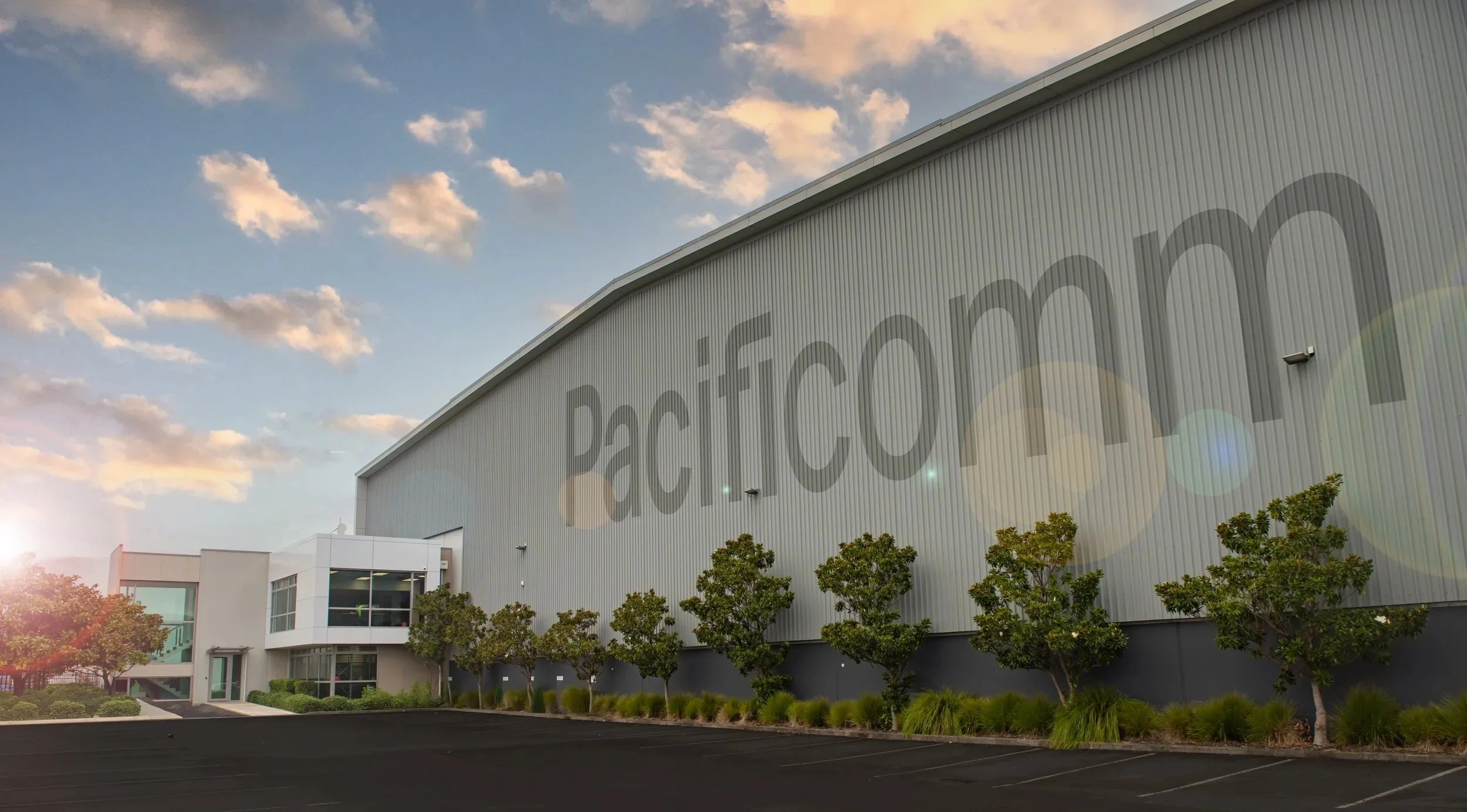
For many growing Kiwi businesses, a 3PL warehouse can feel like a black box. The 3PL warehouse sends your inventory out the door, and orders start arriving at your customers premises or homes. But what actually happens in between?
If you're a business owner or Operations Manager weighing up 3PL warehousing services, understanding the mechanics matters. Handing over stock requires trust. You need to know your products will be counted accurately, stored securely, picked correctly, and dispatched on time.
Here’s a clear look inside a modern logistics warehouse and how contract warehousing and logistics can outperform an in-house setup when growth starts stretching your resources.
Receiving: The Inward Goods Checkpoint
Everything begins at the receiving dock.
When your shipment arrives at a 3PL warehouse, it doesn’t simply get unloaded and shelved. Each pallet or carton goes through an inward goods process:
Physical count against advanced shipping notice
Barcode scanning into the Warehouse Management System (WMS)
Quality and damage checks
Lot, serial or batch recording (where required)
This stage prevents one of the most common issues in scaling businesses: phantom stock. If inbound numbers aren’t verified from day one, discrepancies compound over time. You think you have 200 units available. The system says 200. The shelf holds 173.
A tech-enabled logistics warehouse uses real-time scanning and system validation to lock in accuracy from the start. At Pacificomm, inventory data is captured and visible within the WMS, so you’re not relying on spreadsheets or delayed manual updates. For growing e-commerce brands, this receiving discipline forms the backbone of reliable fulfilment.
Put-Away: Strategic Storage, Not Just Space
Once received, inventory is assigned a storage location.
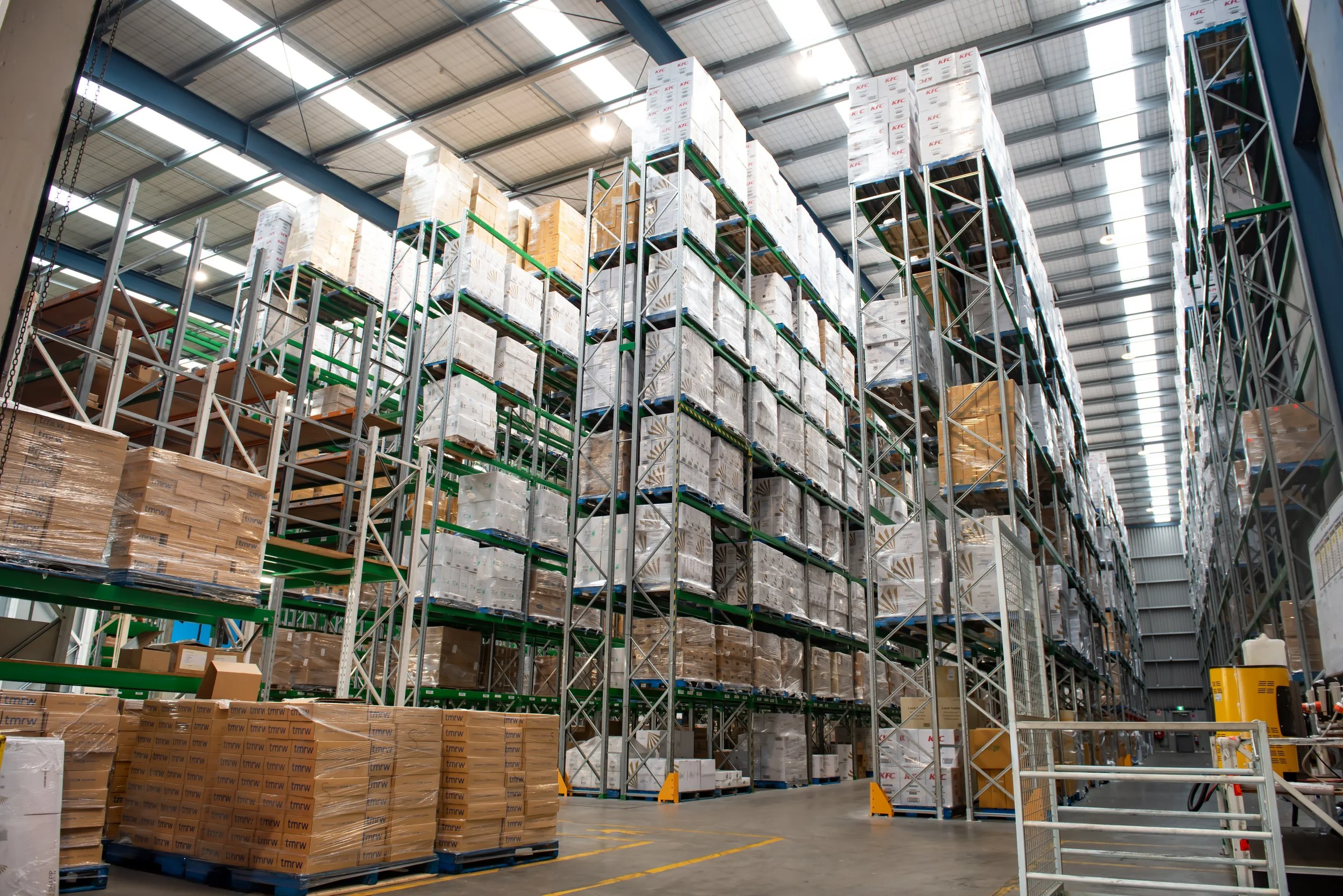
In a structured contract warehousing environment, products are not placed randomly. The WMS directs warehouse staff to specific bin or pallet locations based on product type, turnover rate, size, weight and handling requirements.
Fast-moving SKUs are positioned for efficient access. Slower lines are stored in secondary zones. High-value or fragile goods may be allocated to controlled areas with restricted access.
This is particularly important for brands dealing in tech, health, beauty or FMCG categories. Storage strategy directly affects pick speed, labour cost, and order accuracy. The result is not simply storage. It’s controlled inventory management within a scalable 3PL warehousing model.
Warehouse Specialisations and Zoned Capabilities
Our warehouses are purpose‑designed with dedicated zones to support a wide range of product types and fulfilment requirements. These include:
High‑value secure zones: Separate, access‑controlled areas with dedicated packing benches and full camera visibility, enabling end‑to‑end tracking of individual orders through to final packaging.
Dangerous Goods (DG) handling: Designated zones and compliant processes for the safe storage and handling of regulated goods.
Chilled and temperature‑controlled storage: Controlled environments to protect product integrity for temperature‑sensitive inventory.
Product preparation and packaging services: Including garment steaming, folding, and presentation‑ready packaging tailored to customer brand standards as well as packaging products into a be-spoke presentation box.
Technical diagnostics, repair and refurbishment: Specialist zones for product testing, fault diagnosis, repair, refurbishment, and returns processing.
Fast‑moving, high‑pick zones: Optimised layouts for high‑velocity SKUs, supporting rapid picking and dispatch during high demand.
This zoned approach allows us to tailor workflows to each customer’s products, improving accuracy, speed, and security
Picking: Accuracy Under Pressure
When a customer places an order on your website, it is integrated into the WMS and it generates a picking task instantly.
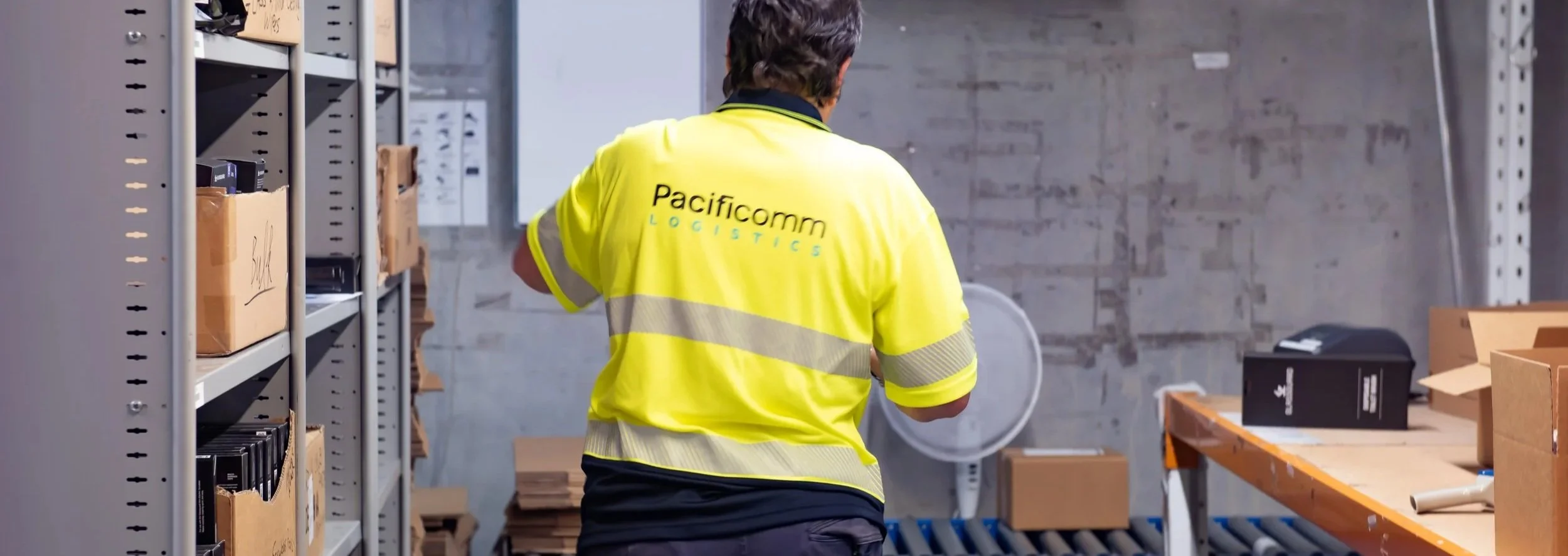
Warehouse staff receive digital instructions via handheld scanners or terminals. Each item is scanned as it’s picked, verifying SKU, quantity and location. This removes reliance on paper pick slips and memory. If the wrong product is scanned, the system flags it immediately.
For businesses managing fulfilment in-house, picking errors often increase as order volumes rise. A structured 3PL warehouse mitigates this risk by embedding verification into the workflow.
You maintain visibility throughout. Stock levels adjust in real time. Orders move from “placed” to “picked” without manual intervention or email chains.
Warehouse Management System (WMS)
We invest in leading, enterprise‑grade warehouse systems that set the standard for accuracy, visibility, and scale.
Our technology environment is designed around best‑practice processes and continuous improvement, ensuring our operations remain robust, adaptable, and ahead of customer requirements as they evolve.
For our customers, what matters are the results: speed, accuracy, transparency, and reliability, delivered consistently across every warehouse.
Packing: Protecting Your Brand Experience
Packing is not just operational. It’s customer-facing.
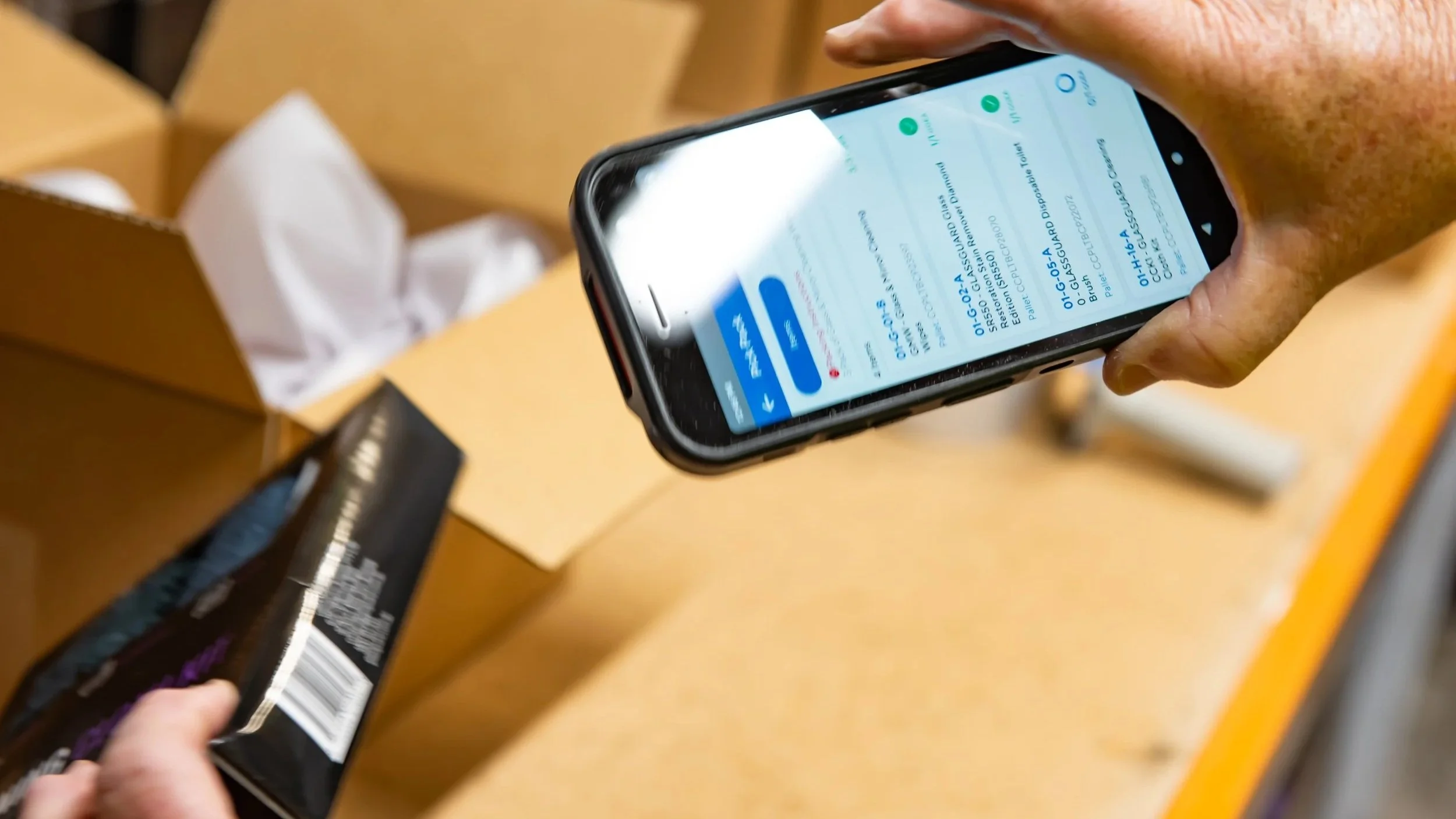
In a professional contract warehousing and logistics environment, packing stations are organised to ensure:
Correct packaging selection
Protective void fill where required
Accurate labelling and documentation
Brand insert inclusion
Damaged parcels or incorrect shipments erode trust quickly. A reliable 3PL warehouse treats packing as part of your brand extension. Systems validate order contents before cartons are sealed, reducing costly returns and support queries.
For SMEs scaling rapidly, this structured packing process removes the late-night scramble of printing labels at the office printer and manually taping boxes on the warehouse floor.
Dispatch: Integrated Freight and Tracking
Once packed, orders move into dispatch. In a connected 3PL warehousing services setup, carrier bookings are integrated directly into the WMS. Labels are generated automatically. Tracking numbers sync back to your e-commerce platform.
That means:
No double-handling of data
No re-keying of addresses
Immediate tracking visibility
Pacificomm’s full-service model combines warehousing, pick/pack, transport and freight under one coordinated framework. This integration reduces the friction that often occurs when storage and freight providers operate separately.
For operations managers juggling multiple vendors, consolidating this into a single contract warehousing partner simplifies accountability and reporting.
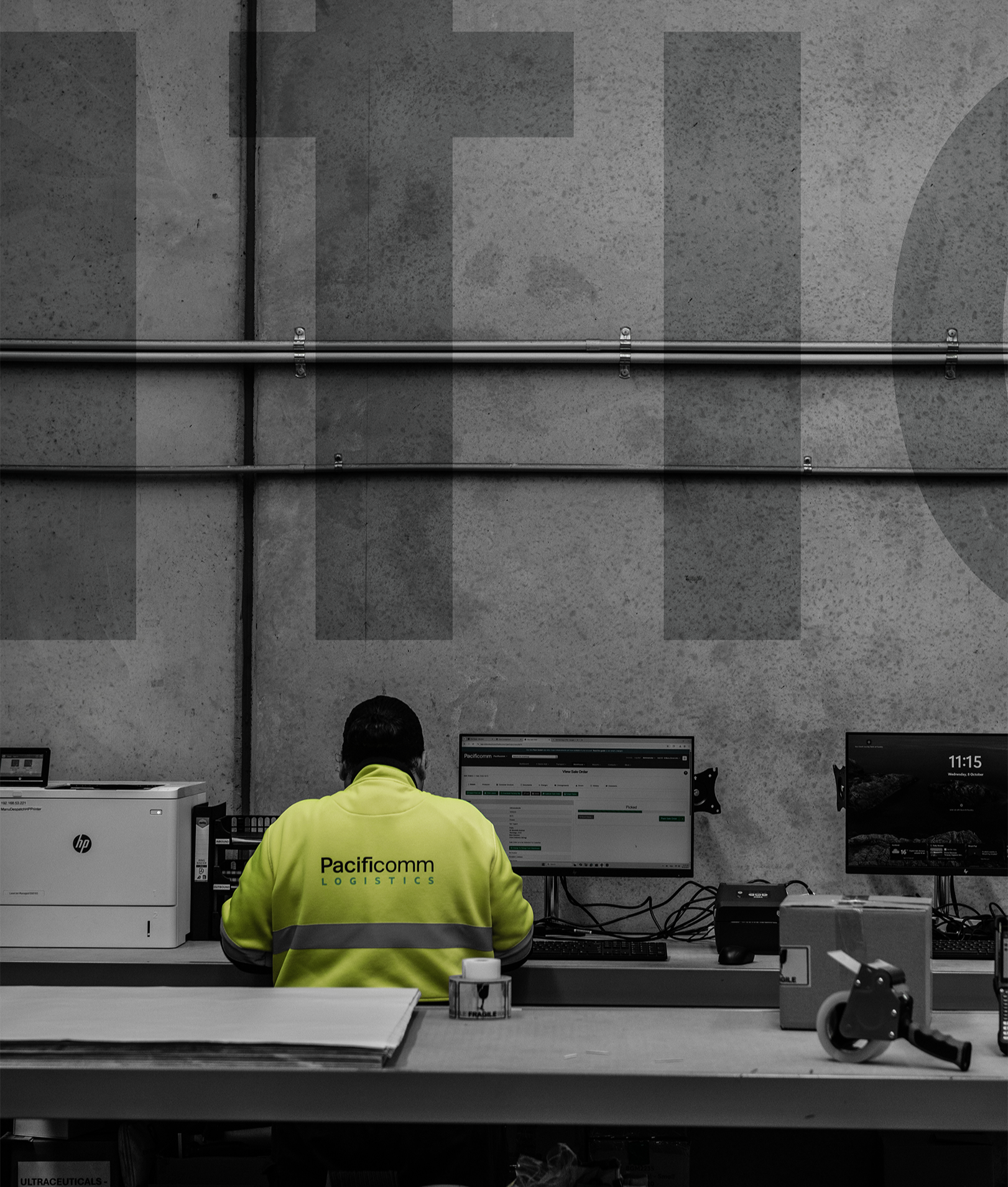
Returns and Reverse Logistics
Returns are part of modern e-commerce. The question is how they’re managed.
In a structured 3PL warehouse:
Returned goods are received and inspected
Condition is assessed
Inventory is either restocked or quarantined
The system updates available stock in real time
Without a defined reverse logistics process, returned inventory often sits in boxes waiting for manual reconciliation. That delays resale and distorts stock visibility. A disciplined reverse workflow keeps your inventory accurate and your customers informed.
Security and Access Control
Security is embedded into every warehouse operation. All facilities feature:
24/7 building security, including monitored alarms and external cameras
Comprehensive internal camera coverage across operational zones
Secure access controls for staff and restricted areas
Electronic visitor registration and access logging for full auditability
These measures ensure product integrity, staff safety, and complete traceability - particularly for high‑value, regulated, or sensitive inventory.
Health & Safety Across Warehouse Operations
We operate disciplined health and safety frameworks across every warehouse, with secure access controls, monitored environments, and clearly defined procedures embedded into daily operations. This ensures a safe workplace for our teams and a secure, well-governed environment for customer inventory.
Customer Onboarding and Go‑Live Timeframes
There is no “one‑size‑fits‑all” onboarding timeframe - implementation depends on product complexity, volumes, integration requirements, and service scope.
That said, when onboarding is planned in advance and systems are pre‑configured, inventory can arrive one day and orders can be picked and dispatched the next. Our focus is on getting it right first. Each onboarding is designed to ensure stability, accuracy, and scalability from day one.
Visibility Without Losing Control
One of the biggest hesitations founders express is the loss of control. Modern contract warehousing addresses this through data transparency.
Pacificomm positions its logistics model around smart technology and system integration that enhances visibility and accelerates turnaround. You’re not handing over control. You’re gaining structured oversight without managing warehouse staff, forklifts, or lease space yourself.
Is a 3PL Warehouse Right for Your Growth Stage?
If you’re:
Running out of physical space
Spending leadership time packing orders
Managing fragmented warehouse and freight providers
Struggling with inventory accuracy
A structured 3PL warehouse model may provide operational clarity and headroom for growth.
Pacificomm is proudly Kiwi-owned and combines local insight with integrated 3PL and 4PL capability. Our operations are built on modern technology, structured logistics systems, and long-term customer partnerships.
Understanding what happens after you send inventory is the first step. Building a scalable supply chain is the next. Enquire about a customised 3PL solution or book a warehouse tour today.